Racing
 League
 Rugby
Rugby
 Football
 Cricket
 Golf
Golf
 Sport Nation
 Motorsport
 Netball
 Basketball
 Combat Sports
 Olympics
 Other Sports
EXCLUSIVE: Disqualified Ukrainian Olympian blasts 'hypocrites' IOC over ban, stance on Russia
Alex Chapman • March 19th, 2026 9:43 am
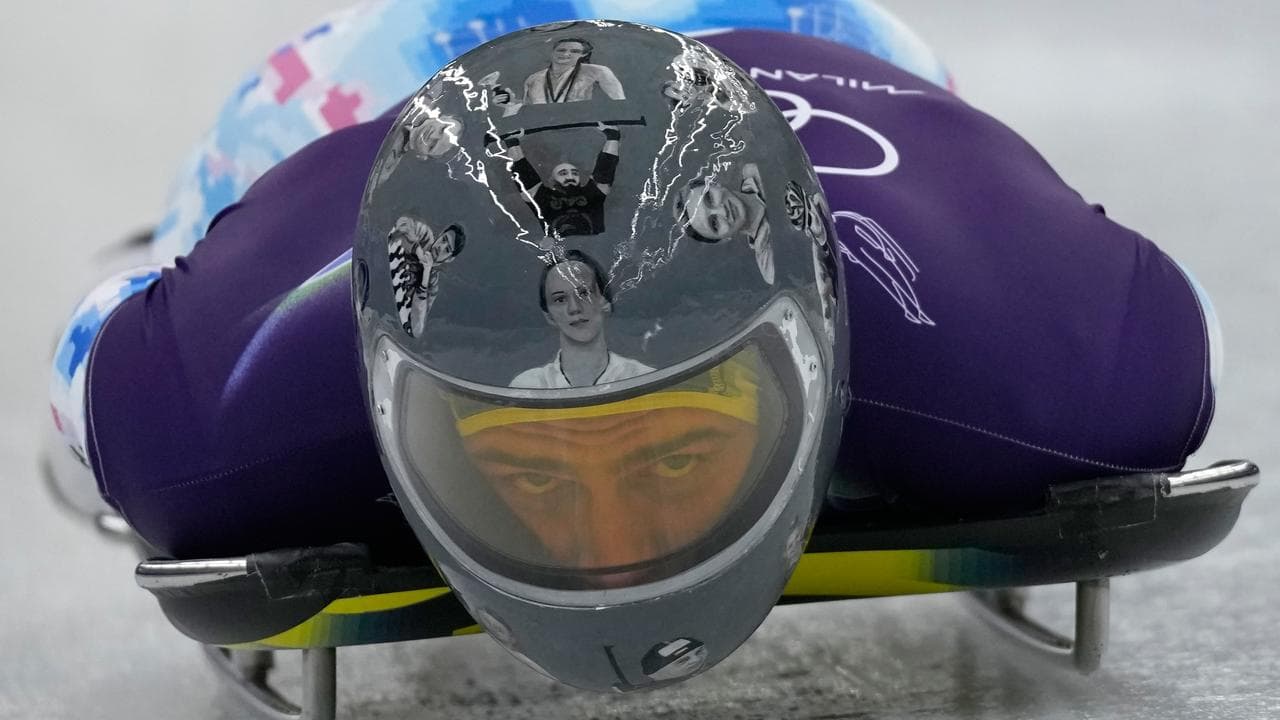
Photo: AP
The man at the centre of the 2026 Winter Olympics’ main controversy believes international powerbrokers are “hypocrites” and “betray Olympic values”.
Ukrainian skeleton racer Vladyslav Heraskevych was disqualified from Milano Cortina over the use of what he called a “helmet of remembrance,” depicting Ukrainian athletes killed during the war with Russia.
Now, a month on, and as he prepares for a human rights appeal, Heraskevych has no regrets, though is unsure when - or if - he’ll return to competition.
“To be honest, I didn’t change any of my opinions,” the 27-year-old told Sport Nation from his grandparents’ home in Kyiv.
“It’s the same as the first day, as the 10th of February, when the scandal got started.
“We didn’t violate any rules. It was just a discriminative decision by the IOC.”
Heraskevych explains he didn’t receive any official warning or penalty, just disqualification.
“So, it's the highest possible measure,” he said.
“And it's not sport-related violation. So, I didn't get any advantage on the result. I didn’t violate rules and I didn't violate the rights of other athletes.
“It was just purely, ‘okay we want to disqualify you because we don't like you’. That's how I see it.”
The IOC insisted that Heraskevych’s helmet violated Rule 50.2 of the Olympic Charter, which states that “no kind of demonstration or political, religious or racial propaganda is permitted in any Olympic sites, venues or other areas”.
He hasn’t spoken to IOC President Kirsty Coventry since he was forced to leave.
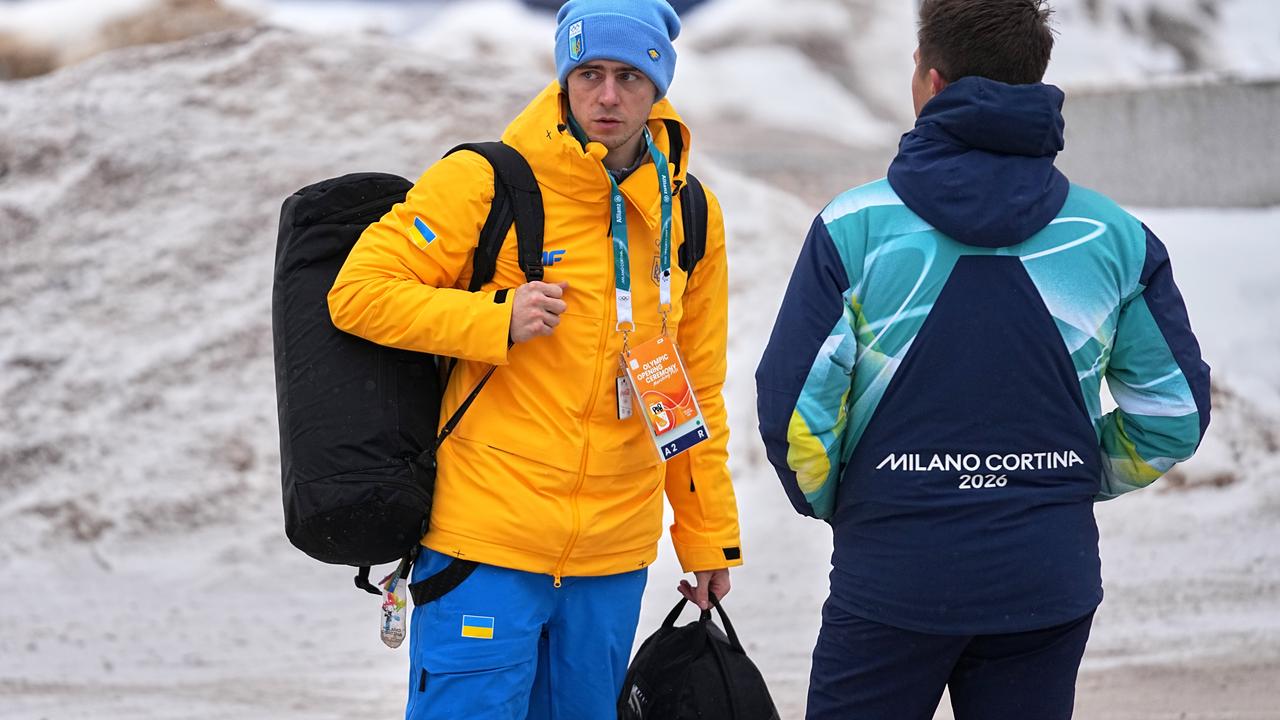
Vladyslav Heraskevych arrives at the sliding centre moments before being told of the IOC's ruling | Photo: AP
At the time, Coventry appeared emotional when addressing the situation. As a two-time Olympic gold medal-winning swimmer, she maintained she was speaking as a former athlete.
“We have these rules in place to try and be fair and also to try and allow us to do both things right — to allow for athletes to express themselves but to also allow for athletes to be safe,” Coventry said, fighting tears.
Heraskevych disagrees.
“Why are these athletes able to honour their family members and I cannot honour my fellow athletes?” he ponders.
“It’s no answer. They always try to avoid these discussions. They try to say like, okay, we shouldn't talk about other cases. We should talk just about this case.
“But then they have these rules and wording that expression is not allowed. How can we understand what is expression in your opinion? Like it could be anything.
“So where is equality? Why was I disqualified? Why is it different? Because they see my move as expression, but the moves of other athletes are not expression.
“In the rules, there’s no meaning of expression. So, it's just expression. So why, in the case of some athletes, to honour their fellow colleagues, it was not expression, but in my case it was expression?”
He also doesn’t see the difference between his helmet and a stance he made at the 2022 Olympics.
At the Beijing Games, Heraskevych flashed a small sign on a blue-and-yellow piece of paper that read “No War in Ukraine,”. He didn’t face repercussions for it, with the IOC calling it a “general call for peace.”
He calls Russia’s inclusion at the recently concluded Winter Paralympics “a mockery” after they were allowed to return to competing under their own flag.
Due to sanctions relating to a doping scandal and the invasion of Ukraine, Russia have been banned from competing since Sochi 2014 and have only been able to compete under a neutral flag due to the ongoing ban handed out by the IOC in 2023.
“With this decision for the Paralympic Games, it became crazy and they don't have any verification process.” Heraskevych anguishes.
“You literally can have ex-military from Russia who get injured in the war in Ukraine. Now they're able to compete in the Paralympic Games under their own flag. They're able to spread propaganda. I watched some Russian athletes dedicate their victory to Putin.
“And with that, they try to violate the human rights of our athletes, Ukrainian athletes, Paralympic athletes. It’s really crazy, especially in the time of full-scale war when we have such a big tragedy.”
New Zealand's most successful Winter Olympics | Scotty & Izzy
But Heraskevych feels that despite their perceived absence, the IOC’s stance on Russia is clear.
“We have the Olympic Games and Russian flags were disqualified, so just neutral flags. But still in the tribunes, in the stadiums, there were a lot of Russian flags in the fan sector. You watched it. No sanctions, no nothing, no investigations.”
He also points to Italian snowboarder Roland Fischnaller displaying a Russian flag on his helmet during the 2026 Olympics, for which there were no consequences.
“Now we have athletes who were killed on my helmet without national symbols, without anything, without some kind of harassment, and I was disqualified. So, it’s a place alongside Russia, it’s obvious. The same goes further and further now with the Paralympic Games.
“It’s crazy. It is dictatorship, and still the International Paralympic Committee doesn't have anything — like it's not a problem for them that an athlete dedicates his win to Putin, who is now committing genocide in Ukraine.”
“It’s crazy to say that sport is out of politics, because in Ukraine it’s not. Athletes are being killed the same as any other Ukrainians. Sports facilities are being destroyed as other facilities.
“We cannot be separated from politics. And of course, when we hear something like ‘sport is out of politics’ from the IOC or IPC — it’s mockery.”
He believes the “Olympic values” have also come into question.
Per the Olympic website: “The three values of Olympism are excellence, respect and friendship. They constitute the foundation on which the Olympic Movement builds its activities to promote sport, culture and education with a view to building a better world.”
Heraskevych thinks the “IOC and IPC betray Olympic values.”
“When we talk about Olympic Games and Paralympic Games, we are always talking about some peaceful movement. We’re talking about friendship, about Olympic values,” he explains.
“But when you try to bully a victim of war, and then honour aggressor-like states, which are now attacking our country and trying to occupy it... it feels not right.
Heraskevych says he hasn’t lost any sponsorship or money throughout the process and has spent much of the last month focusing on work for his charitable foundation, which he founded in 2022. Businesses have also reached out to enquire how they can help.
“We contacted some families and I was asking, ‘What do you need? What do you want? We can support you. We have some money, donations, so we can help.’”
The feedback ranged from small sporting facilities to a playground paying tribute to a son who was killed during the war.
“Another family — their son was a cyclist — asked about a couple of bikes to donate to his school where he trained as a kid. So now we’re working on these two projects.
“For me, it’s huge. People are amazing and it really motivates me to do more.”
As someone with a master’s degree in physics, he wants to offer support for what he calls “educational projects,” providing support and facilities.
But whether he’ll return to competing remains up in the air.
“I really like this sport and I want to compete. Maybe it will not be the full season. Maybe it will be the full season.
“But it’s also important to understand that I was disqualified not just by the IOC, but by the IOC and my international federation.
“And it’s a really good question if I want to be part of this family and if I want to share the stage with them — especially under this leadership.
“Or if I want to… yeah, we will see.”
Watch the full interview via the Sport Nation YouTube below: